One resident. 3.5 years. One question that still has no answer.
OurStory.
This fight started at my back fence. It is now before a court of law. Here is why.
In the words of
Steve
Petitioner · Ventura County Resident · 3.5 Years Fighting for a SOAR Vote
My name is Steve. The prime farmland immediately behind my home is the proposed site of the Ventura Ranch Farmworker Housing Project — PL23-0051. I have been engaged in this process from day one, and for more than three and a half years I have been raising the same demand through every available public channel: this project requires a SOAR vote, and that vote has never been held.
SOAR — the Save Open-space and Agricultural Resources ordinance — was passed by Ventura County voters to protect prime farmland from permanent urbanization. It does not merely advise the Board of Supervisors. It transfers authority over SOAR-designated land from the Board directly to the voters. No project on that land may proceed without a SOAR Compliance Determination approved by the public. That is not a matter of interpretation. That is the plain language of the ordinance.
I have spent thousands of dollars and an enormous amount of time pursuing this through legitimate channels: public comment, Public Records Act requests, and attendance at nearly every meeting held on this project. I produced materials, organized outreach, and raised substantive concerns about farmworker safety, public health, pesticide exposure, and fire danger — all documented, all on the record, all tied to a site located within a Very High Fire Hazard Severity Zone. Those concerns were acknowledged procedurally and dismissed substantively. That pattern repeated itself at every stage of the process.
"A unanimous vote with no dissent, no deliberation, and no identified legal basis for overriding a voter-approved ordinance is not the mark of a board doing its due diligence."
How It Started
Where This Story Begins: The Lemon Orchard
Over the Christmas holiday and into the New Year of 2022, I watched a historically productive lemon orchard at 4884 N. Ventura Avenue get torn out of the ground by a bulldozer — at night. The back portion of the orchard was cleared first. The front rows were left standing until last, so that neighbors and passersby would not see what was happening during daylight hours. I watched it from my property. I documented it.
Every lemon tree was ground up on site. The mulched remains — wood, fruit, leaves — were piled four feet high along the back fence line of the neighboring homes. It was not a courtesy. The decomposing material soaked through the winter rains for months. The smell was sharp and persistent. It was the smell of an orchard that had stood for generations being disposed of overnight.
What replaced it was sorghum — a crop that, at this scale and in this region, costs more to prepare and grow than it could ever return in value. It was not a serious agricultural use. It was a placeholder. What followed confirmed that: the site was then irrigated with a documented volume exceeding seven million gallons of water in a very short period of time. That level of water use on a marginal sorghum crop on a small parcel is not farming. It is preparation for something else.
That sequence of events — the nighttime clearing, the sorghum planting, the extraordinary water use — set the tone for everything that followed in the county approval process. The orchard was gone before most people knew it was at risk. The project was moving before the public had any meaningful opportunity to weigh in.
Documented
"The orchard was gone before most people knew it was at risk. The project was moving before the public had any meaningful opportunity to weigh in."
The Process
The Promises That Were Not Kept
In the early stages of this project, county staff indicated that a full Environmental Impact Report would be required — that our concerns about public health, fire safety, pesticide exposure, and site suitability would have to be addressed through a rigorous, public process. That commitment was not honored. The county ultimately pursued CEQA streamlining, bypassing the full EIR entirely. There was no meaningful public input on the environmental record. There was no opportunity for the community to challenge the findings before the decision was made.
The Planning Department and the Board of Supervisors reversed positions that had been stated to the public. Each reversal moved the project forward and reduced the county's accountability for the decision. Taken together, the pattern is not one of good-faith deliberation. It is one of a process being managed toward a predetermined conclusion — with the public's role reduced at every turn.
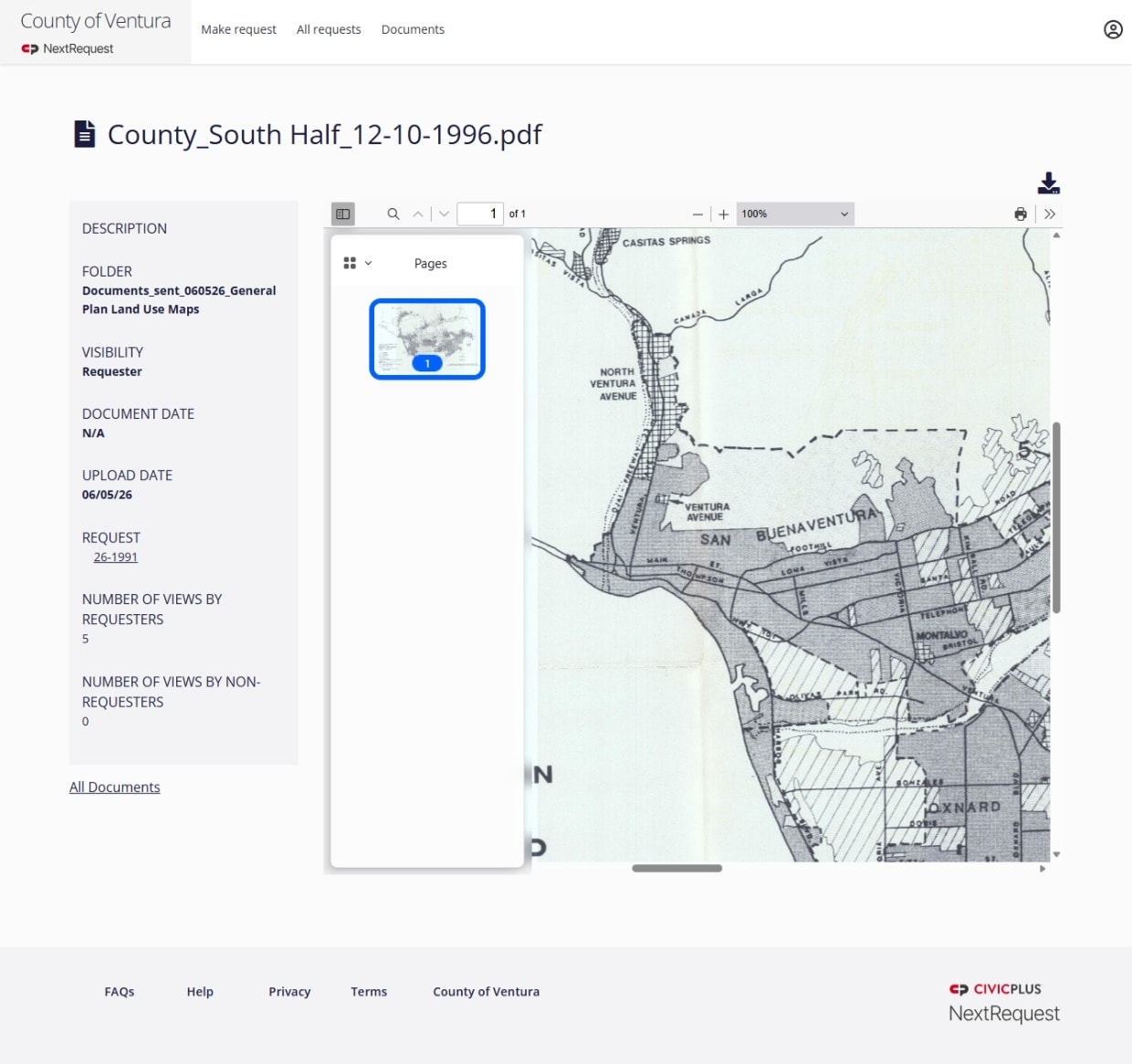
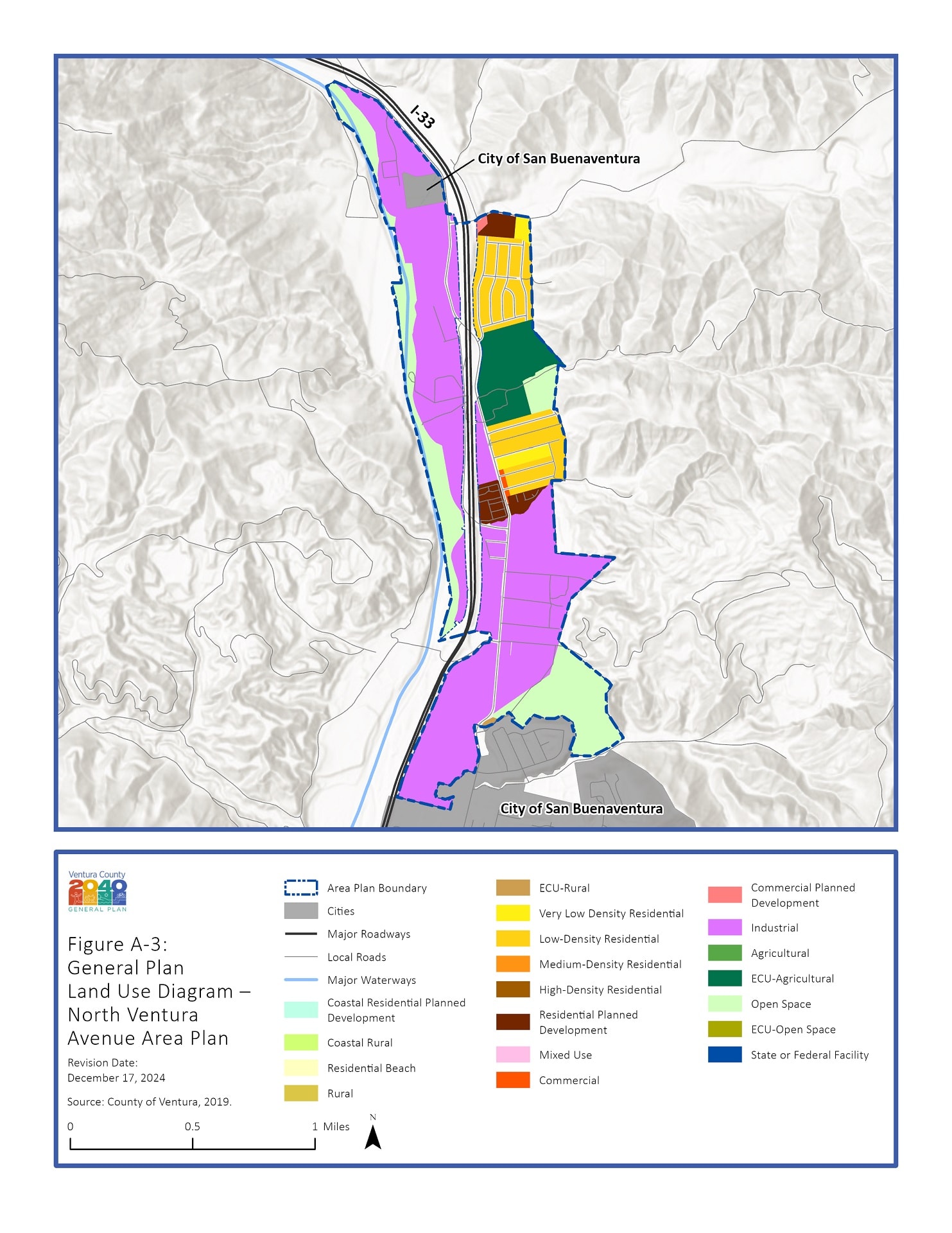
I have requested every map, every adopted document, and every record the Planning Department has on file related to this site and its SOAR status. I have been told directly by the Planning Department that no other map exists — that what I have been given represents the entirety of what has ever been adopted. That record does not contain an authority chain showing how the county could bridge the SOAR gap and govern this approval without a public vote. The North Ventura Avenue Area Plan performed an explicit agricultural screening exercise, formally designated this 71-acre corridor for continued Open Space/Agricultural use, and created a binary framework distinguishing it from Existing Community land. The authority that superseded that framework does not exist in the public record. It has never been produced.
Source Document
North Ventura Avenue Area Plan — Figure NV-6
This figure from the adopted Area Plan carries the same adoption date as Figure A-3 — yet designates the project site as Agricultural only. A-3 was revised December 17, 2024, well after the Ventura Ranch application was already in process. NV-6 was not. The question is direct: which figure reflects the lawfully adopted designation at the time the county acted, and where is the SOAR vote that would have been required to change it?
Document withheld from public posting to protect petitioner privacy. Available as part of the court record.
Both maps are part of the public record. The 1996 General Plan map shows the site designated Agriculture/Open Space at the time SOAR was created. The 2024 Area Plan revision postdates the approval process entirely. Neither map contains an Existing Community designation at this site. The county has not produced the adopted act — predating the application — that would explain how the SOAR-protected status was lawfully changed before this project was approved.
A 5–0 Vote. No Questions Asked.
The Ventura County Board of Supervisors approved PL23-0051 by a vote of 5–0. Not one supervisor raised a question about fire safety. Not one asked about the SOAR authority pathway. Not one expressed concern about pesticide exposure for the future residents this project claims to serve. A unanimous vote with no dissent, no deliberation, and no identified legal basis for overriding a voter-approved ordinance is not the mark of a board doing its due diligence. It is the mark of a predetermined outcome.
The Public Records Act documents I obtained through formal request reveal a pattern of informal communications and coordination that the official record was not designed to capture. Taken together, those documents raise serious questions about whether the Board's decision-making process was as independent and impartial as the public had a right to expect.
The public comment process was constrained. Speaking time was reduced. Substantive objections were entered into the record and set aside without meaningful response. When the Planning Commission hearing concluded, the most critical element was still absent from the record: the adopted legal authority pathway that would permit development of SOAR-protected land without a public vote. That pathway was never identified. It has not been identified to this day.
The Question That Started It All
By what legal authority did the Board of Supervisors transfer back to itself the power that SOAR took away and gave to the voters?
Why I Filed the Writ Petition
I am not an attorney. I am a 57-year-old Ventura County resident who has spent years exhausting every available administrative remedy. I am doing this alone. When the Planning Commission hearing made clear that the county intended to finalize this approval without ever identifying the legal authority required to do so, filing a writ petition was the only remedy left. I filed it myself, on behalf of my family and every voter whose authority under SOAR is at stake.
This case began as a traditional writ proceeding under Code of Civil Procedure section 1085, challenging the Respondents' authority to deem complete, process, and approve Ventura Ranch, Project No. PL23-0051. The Court's writ case-management order expressly recognizes that this proceeding may involve CCP §§ 1085, 1094.5, and 1102 et seq.
I was asked to wait until after the Board hearing and to allow the county additional time to prepare its position. I agreed, in good faith. In hindsight, that agreement may not have served my interests. I was challenging the county's authority to sit and proceed with the approval at all. Had I held that position, the county would have been required to identify — on the record, before the hearing — the legal pathway by which it claimed the authority to approve a project on SOAR-protected land without a public vote. That question was never forced. It should have been.
The question at the center of this case remains unanswered: by what adopted legal authority did the Board of Supervisors reclaim the power that SOAR transferred to the voters? If this approval is allowed to stand without answering it, SOAR is not a meaningful protection. It becomes a formality that any board can bypass by simply declining to engage with it. That outcome would be a serious failure of the democratic process that created SOAR in the first place.
The Case Management Conference is scheduled for August 27th at 8:30 a.m. in Department 44. I will continue to update this site as the case moves forward. This fight is not over.
Legal Basis
This case was filed as a traditional writ proceeding under Code of Civil Procedure § 1085, challenging Respondents' authority to deem complete, process, and approve Ventura Ranch, Project No. PL23-0051. The Court's writ case-management order expressly recognizes that this proceeding may involve CCP §§ 1085, 1094.5, and 1102 et seq.
Why I Am Still Standing Here
For more than three and a half years, I have fought this proposal — not because I oppose progress, housing, or opportunities for others, but because I believed the promises that were made.
When we bought our home, we were told that the farmland and open space behind us were protected — that SOAR existed for a reason, and that as long as the voters continued to extend those protections, that land would remain safeguarded from urban development. We relied on those representations when making one of the biggest financial and personal decisions of our lives. We built our future around them. My wife, our dogs, our cats, and a parrot who has strong opinions about all of it — we built our lives here with the understanding that the voters' commitment to preserving agricultural land was real, enforceable, and worthy of public trust.
Now, after years of hearings, studies, legal filings, and countless hours devoted to understanding this proposal, I find myself confronting the painful reality that the very protections the public repeatedly voted to preserve are being treated as obstacles to be explained away rather than promises to be honored.
I will be the first to admit that when this issue first arose, my reaction was personal — because this is not some abstract project occurring somewhere else. It is literally in my backyard. Like many people, my initial instinct was to focus on how it might affect my immediate community, and I openly voiced those concerns.
But as I spent more time examining the larger issues at stake, I came to recognize that responsible planning and public policy cannot be driven solely by whose backyard happens to be closest. If every resident draws a circle around their own neighborhood and declares that necessary housing, infrastructure, or community investment should happen somewhere else, then nothing meaningful ever gets built and broader community needs go unmet.
Being opposed to NIMBYism does not mean abandoning legitimate concerns about design, traffic, environmental impacts, or compatibility. It means acknowledging that those concerns should be addressed through thoughtful planning rather than used as a blanket justification to prevent change altogether. In my case, supporting a fair and principled approach requires me to apply the same standards to my own backyard that I would apply anywhere else. Consistency matters.
I am not opposing farmworker housing. I support safe, affordable housing for farmworkers — the people who would live here deserve that, and so does every worker in this county. My challenge is not to them. It is to the County's legal process.
What I am asking for is straightforward: if the County relied on an Existing Community designation to avoid SOAR and Area Plan protections, the public deserves to see the specific resolution, map amendment, or voter-approved action that made that possible. That document should exist. It should be in the record. It has not been produced.
This fight has never been easy. It has consumed evenings, weekends, and years that can never be returned. Yet I continue because this is about more than the view from my backyard. It is about whether citizens can rely on what their government tells them, whether voter-adopted protections still mean what they say, and whether commitments made to a community endure when they become inconvenient.
I recognize that some will dismiss my concerns as NIMBYism because this project is literally in my backyard. The truth is that my proximity to it gives me every reason to care deeply, but my opposition is rooted in something far larger than self-interest. If voter-approved land use protections can be set aside whenever they become inconvenient, then no neighborhood, no open space, and no public promise is truly secure.
Insisting on lawful, documented decision-making protects everyone — including the people who will live and work here. Transparent process is not a barrier to good outcomes. It is the foundation of them. I raise these points out of respect for democratic process and for the community this project claims to serve.
"This fight has become about preserving trust itself — and that is why, after three and a half years, I am still standing here."
Steve B.
Petitioner · Ventura County Resident · Neighbor
Please Stand With Us
This has been an all-consuming effort for years — financially, personally, and in terms of time. My family and I are fighting to preserve the beautiful prime farmland immediately behind our home from being permanently removed from Ventura County's agricultural roster. Once that land is paved, it does not come back. If you believe that elected officials must answer to the law they are sworn to uphold — and to the voters who put them in office — we are asking for your support.
See How You Can Help