CIRCUMVENTING VERY HIGH FIRE ZONE SAFETY ORDINANCE IS INJUDICIOUS

CIRCUMVENTING VERY HIGH FIRE ZONE SAFETY ORDINANCE IS INJUDICIOUSCIRCUMVENTING VERY HIGH FIRE ZONE SAFETY ORDINANCE IS INJUDICIOUSCIRCUMVENTING VERY HIGH FIRE ZONE SAFETY ORDINANCE IS INJUDICIOUS
STAND WITH US
FARMWORKER ALERT
OTHER SAFETY CONCERNS,etc

CIRCUMVENTING VERY HIGH FIRE ZONE SAFETY ORDINANCE IS INJUDICIOUS

CIRCUMVENTING VERY HIGH FIRE ZONE SAFETY ORDINANCE IS INJUDICIOUSCIRCUMVENTING VERY HIGH FIRE ZONE SAFETY ORDINANCE IS INJUDICIOUSCIRCUMVENTING VERY HIGH FIRE ZONE SAFETY ORDINANCE IS INJUDICIOUS
STAND WITH US
FARMWORKER ALERT
OTHER SAFETY CONCERNS,etc
More
  • STAND WITH US
  • FARMWORKER ALERT
  • OTHER SAFETY CONCERNS,etc
  • STAND WITH US
  • FARMWORKER ALERT
  • OTHER SAFETY CONCERNS,etc

PUBLIC COMMENT MEETING IS THURSDAY JANUARY 22 AT 8:30 AM 800 S. VICTORIA

PUBLIC COMMENT MEETING IS THURSDAY JANUARY 22 AT 8:30 AM 800 S. VICTORIAPUBLIC COMMENT MEETING IS THURSDAY JANUARY 22 AT 8:30 AM 800 S. VICTORIAPUBLIC COMMENT MEETING IS THURSDAY JANUARY 22 AT 8:30 AM 800 S. VICTORIA

Be There And Stand With Us To Squash This Exploitive Development

HOUSING FARMWORKERS AND THEIR FAMILIES IN PATH OF WILDFIRE

Join Us ! THURSDAY JANUARY 22, 2026 AT 8:30 AM County Supervisors Room 800 S. Victoria Ave.

SAY "NO" TO THIS ILLEGAL BUILDING OF A FARMWORKER HOUSING VILLAGE IN A VERY HIGH FIRE HAZZARD SEVERITY ZONE, VIOLATING SAFE FARMWORKER HOUSING ORDINANCE. 8107  

  Sec. 8107 A farmworker housing complex shall be prohibited in any location designated a Very High Fire Hazard Severity Zone  One would assume that a AMCAL project of this magnitude would prioritize farmworker safety rather than neglect it entirely. AMCAL appears to be a company that prioritizes profit over the safety of farmworkers. It seems clear from their proposal that they do not genuinely care for the hardworking farmworkers, or they would consider relocation to a safer place away from the inherent dangers associated with 4884 N. Ventura Ave, WWW.SAFEFARMWORKERHOUSING.COM

Soil Contamination etc. at 4884 N Ventura Ave

Here's what we have got

 factual summary of environmental, health, and regulatory concerns

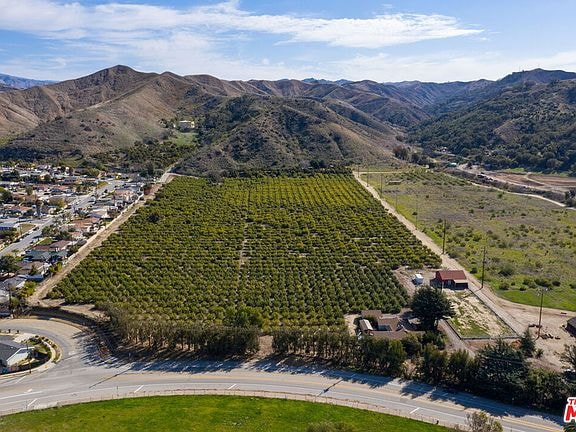
For more than fifty years, the property at 4884 N. Ventura Avenue has been used for commercial agriculture, primarily lemons and avocados. Historical pesticide use reports from the California Department of Pesticide Regulation (DPR) show continuous applications of multiple chemical classes, including:

• Organophosphates (e.g., chlorpyrifos, diazinon, phosmet, methidathion)

• Groundwater‑mobile herbicides (simazine, diuron)

• Highly toxic compounds (paraquat dichloride, strychnine, zinc phosphide)

• Copper fungicides (copper sulfate, copper oxychloride)

• Petroleum distillates and xylene‑based insecticides

• Avermectin‑class miticides

• Multiple glyphosate formulations

• Chloropicrin fumigants

Many of these chemicals are known to persist in soil for decades, migrate into groundwater, or volatilize into indoor air. Several are classified by state or federal agencies as toxic, restricted materials, or probable carcinogens.


Why This Matters for Housing

The proposed development at this location consists of 18 three‑story residential buildings intended for farmworker families. Under California law, farmworker housing is treated as residential exposure, which requires the highest level of environmental protection.

Residents may include:

• Children

• Pregnant individuals

• Elderly adults

• Farmworkers with existing occupational exposure

These groups are considered sensitive receptors under CEQA and OEHHA health‑risk guidelines.


Required Environmental Review

Under the California Environmental Quality Act (CEQA), a project must undergo a full Environmental Impact Report (EIR) when there is evidence of:

• Historical pesticide contamination

• Potential exposure to hazardous materials

• Groundwater contamination risk

• Vapor intrusion pathways

• Cumulative health impacts

• Wildfire evacuation constraints

All of these conditions are present at 4884 N. Ventura Avenue.

A complete environmental investigation typically includes:

• Phase I Environmental Site Assessment

• Phase II soil sampling

• Groundwater testing

• Soil‑gas sampling

• Vapor intrusion modeling

• A Human Health Risk Assessment (HHRA) under DTSC guidance


Fire Hazard and Evacuation

The property is located within a Very High Fire Hazard Severity Zone (VHFHSZ). Multi‑story residential structures in such zones require analysis of:

• Evacuation feasibility

• Roadway capacity

• Emergency response times

• Wildland‑urban interface risks

These factors must be evaluated before any approval.


Housing Streamlining Laws Do Not Apply

California has recently expanded farmworker housing protections through AB 2240, AB 3035, and SB 1105, but these laws do not override CEQA and do not apply to contaminated or high‑fire‑hazard sites.

Specifically:

• AB 2240 modernizes state‑run labor centers only.

• AB 3035 excludes sites with hazardous materials, contamination, or fire‑hazard constraints.

• SB 1105 addresses emergency worker protections, not land‑use approvals.

Additionally, SB 35 (Gov. Code §65913.4) — California’s primary housing streamlining law — explicitly excludes:

• Sites with hazardous materials

• Sites requiring cleanup

• Agricultural land

• Very High Fire Hazard Severity Zones

The 4884 N. Ventura Avenue site meets all four exclusion criteria.


Conclusion

The historical record shows that the 4884 N. Ventura Avenue property contains multiple indicators of potential soil and groundwater contamination from decades of agricultural pesticide use. Because the proposed project would house farmworker families, CEQA requires a full Environmental Impact Report and comprehensive environmental testing before any development can be approved.

Ensuring safe, healthy, and environmentally sound housing for farmworkers is not only a legal requirement — it is a public‑health necessity.

safefarmworkerhousing.com

 Pesticide Use in Ventura County 

highway 33 is over built on if you depend on it beware !!

Ojai, Meiners Oaks, Mira Monte, casitas springs, oak view, ortonville

 THE THOMAS FIRE SHOWED US ALL HOW CONGESTED OUR EVACUATION ROUTE 33 OUT OF HERE REALLY IS.  ALL THE EVACUEES FROM OJAI AND DOWN TO STANLY RD HAD HWY 33 DANGEROUSLY CONGESTED WITH 101 FREEWAY IN GRIDLOCK AT THE SOUTH 101 FREEWAY EXCHANGE. IT GOT WORSE AS THE FIRE MOVED TOWARDS OJAI LATER IN THE NIGHT AND EARLY MORNING HOURS. WE HAD NO CHOICE BUT TO CAMP OUT ALONG THE ROAD WITH ASH LANDING ALL AROUND US AND DENSE SMOKE IN THE AIR. IF THERE HAD BEEN WIND WE ALL MIGHT HAVE PERISHED.

developer claim vs. actual

Jan. 22nd. meeting: More investigation needed!

 Our follow up letter to the Commissioners 

  Fact or Fiction

Honorable Commissioners,

We are writing to you with urgency and deep concern for the lives of the people who would be placed at Ventura Ranch — and for the families who already live here. The discussion at the January 22 hearing made one thing painfully clear: the public is being given a false sense of safety. Several speakers, including the applicant, suggested that residents could “just shelter in place” because the buildings would be “60‑minute hardened to Cal Fire specifications.”

These statements are misleading, unsupported, and dangerous.

A 60‑minute interior fire rating is a laboratory test for structural fire resistance. It does not prevent ember intrusion. It does not stop radiant heat. It does not keep smoke out. And it does not turn combustible, wood‑framed apartments into wildfire refuges. In a wind‑driven wildfire, interior conditions can become unsurvivable within minutes, well before structural failure, because toxic smoke, heat, and loss of breathable air incapacitate occupants long before a rated wall assembly reaches its test duration.

There is no evidence in the public record that these buildings meet any recognized standard for wildfire shelter‑in‑place design. None. Yet the public was repeatedly told that sheltering in place was a viable option. That is not fire science. That is not Cal Fire guidance. That is not NIST guidance. And it is not the truth.

Ventura Ranch is located inside a Very High Fire Hazard Severity Zone — the highest wildfire‑risk designation in California. County ordinance prohibits farmworker housing in this zone because the life‑safety risk is too great. Density Bonus Law cannot override health and safety laws. Approving this project would therefore be inconsistent with County ordinance and legally indefensible.

Evacuation is also not realistic. Ventura Ranch would add more than a thousand residents and over 500 vehicles to a corridor that already serves 2,000–3,000 people along North Ventura Avenue. In a fast‑moving, wind‑driven wildfire, fire spread can outpace evacuation by miles per hour. Disabled or burning vehicles can block lanes. The roadway network simply cannot move that many people fast enough. There is no scenario in which everyone can be evacuated before fire arrival.

The applicant also suggested that their buildings would “help protect” neighboring homes during a wildfire. That statement is not supported by wildfire science. These are combustible, wood‑framed, three‑story residential structures located inside a Very High Fire Hazard Severity Zone. They are not noncombustible barriers, they are not engineered fire refuges, and they do not provide radiant‑heat shielding. In a wind‑driven wildfire, these buildings are fuel, not protection.

At the same time, the project concentrates 527 gasoline‑powered vehicles around these combustible buildings, including more than 300 vehicles directly behind our homes in what should be a fire buffer zone. In wildfire conditions, vehicles can ignite from radiant heat or embers. Once ignited, a vehicle fire can reach peak heat release in 8–10 minutes, producing intense radiant heat and toxic smoke capable of igniting nearby structures. Multiple vehicles burning in close proximity can create a cascading ignition pattern. This parking configuration is not a buffer — it is an ignition zone placed directly against existing homes.

If AMCAL intends to claim that shelter‑in‑place is a viable alternative, then every building would need to be a stand‑alone, noncombustible, hardened refuge structure with sealed openings, protected mechanical systems, engineered smoke control, and sufficient interior refuge capacity. None of that is included in this project. Instead, the design concentrates combustible buildings and hundreds of vehicles in a VHFHSZ, creating conditions that can become life‑threatening in minutes.

Commissioners, this is not an abstract risk. This is not a theoretical hazard. This is a foreseeable, predictable, preventable life‑safety failure. People can die — and die very quickly — when smoke, heat, and toxic gases enter a building that was never designed to protect them. That is why County ordinance prohibits this type of housing in this zone. That is why Cal Fire does not endorse shelter‑in‑place in combustible structures. And that is why this project, as proposed, cannot be approved.

We urge you to reject the exemption and require a full Environmental Impact Report. Lives depend on it.

Respectfully,

Beth and Steve

Immediate abutting residents directly threatened by the Ventura Ranch proposal

Putting Lives In Danger in a High Fire hazard Severity zone

Building farmworker housing in a known wildfire path is not ok!

AMCAL is showing a clear disregard for farmworkers. What more evidence is needed? By building Ventura Ranch in a prohibited high fire severity hazard zone, they’re putting farmworkers and their families at high risk. On top of that, segregating Hundreds of farmworkers and their households could invite ICE document inspections at anytime since it’s widely known that undocumented immigrants could live there..

Somis Ranch Farmworker Housing Tour 12/21/25 8:30am

Check out this video of Somis Ranch High-Density Farmworker Housing  located within the Somis Farm Belt and 15 min from Fillmore's farms.. With so many vacant units, it seems the rumors might be true. It’s pretty clear that most farmworkers aren’t interested in living in segregated, high-density housing. like AMCAL's Somis Ranch Farmworker Housing and the AMCAL High Risk, Massive Ventura Ranch. Farmworker Housing that is being Proposal distanced from major farming areas found in Ventura County

Profit-driven, highly concentrated farmworker housing

Construction of multi-story residential buildings in progress.

Farmworkers living in concentrated housing?

  • These fire vulnerable wood and stucco giant structures are not farmworker housing built by a farmer for his farm help, they are profit-driven concentrated apartment complex's that clash with the existing single-story neighborhoods on N. Ventura Ave. in the VHFHSZ. Theres a big Question that has yet to be answered..... Is this massive housing project even needed? Farmworkers are rumored to not want to be Housed in complex's that will be a publicly scrutinized. The proposed site is simply inappropriate for this project. Recognizing the necessity for affordable farmworker housing, it nonetheless should not be situated in an area entirely within and surrounded by a Very High Fire Hazard Severity Zone. AMCAL ought to show their ethical commitment by retracting their plans for this location and searching for a safer, more suitable site for a smaller development keeping the safety and real needs of the farmworkers at the forefront


no ventura ranch is for the Chumash people as well

We are committed to those who were here before us.


VERY SENSITIVE ARCHAELOGICAL AREAS

4884 N. Ventura Ave is a very sensitive Chumash archaeological site listed on the County of Ventura RMA GIS Public Planning Report. Who will monitor this site to see that no sensitive Chumash artifacts are being ruined by this intrusion on Highly Sensitive soil? Does AMCAL have a plan to Honor the Native Tribe that this land originally belonged to? 

Copyright © 2024 No Ventura Ranch - All Rights Reserved.

  • STAND WITH US
  • FARMWORKER ALERT
  • OTHER SAFETY CONCERNS,etc

Powered by